
>> CONTENT WARNING: The first mini gallery (below) contains potentially distressing images from a laparoscopic surgery; the second mini gallery does not!
FULL VIDEO TRANSCRIPTION:
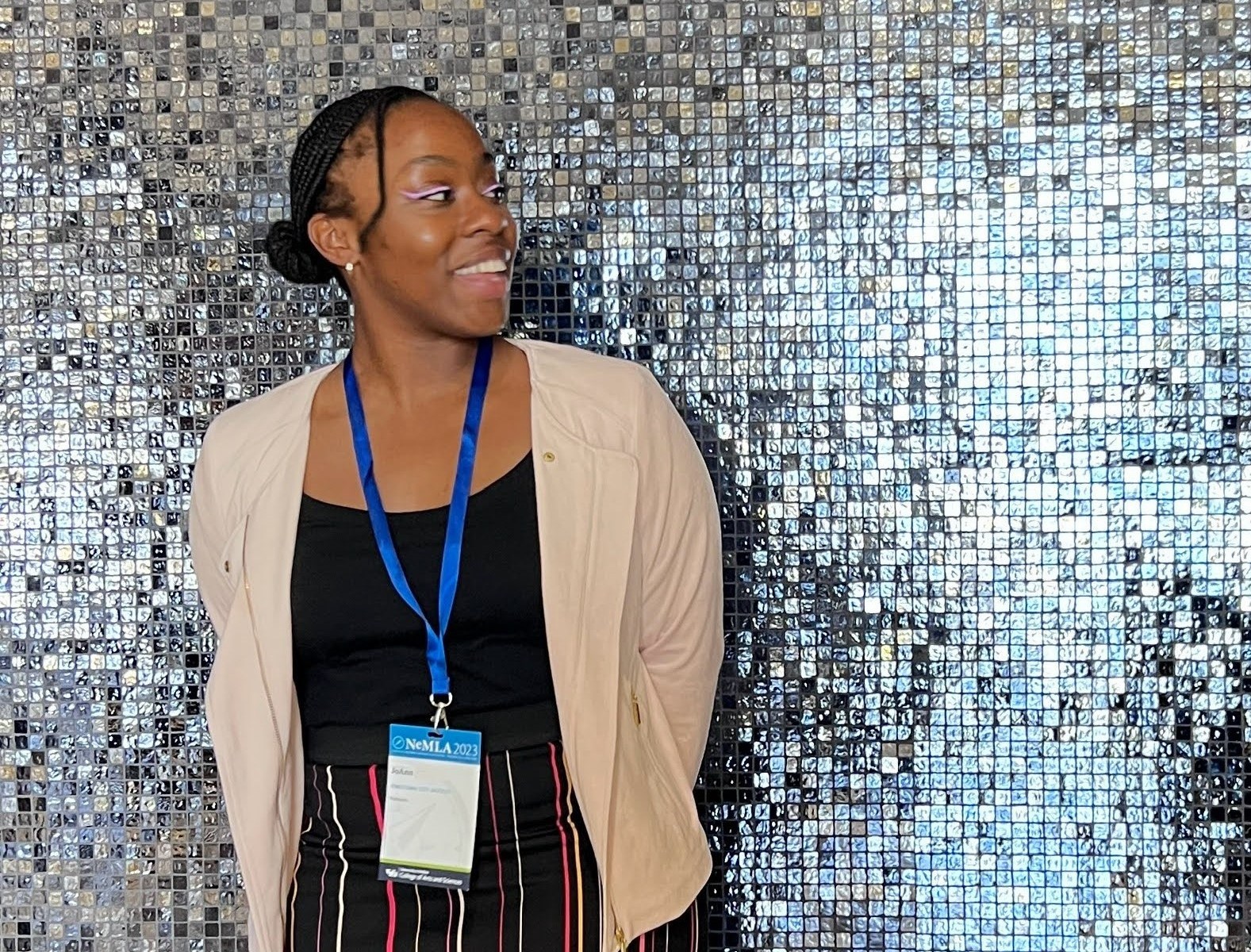
“Good afternoon! Thank you so much. Thank you to everyone who has also gone before me. My name is JoAnn Michel. I am going to turn on my professor voice because this is a very big room. I am a PhD candidate at Penn State University, dual title in French and Women’s and Gender Studies. I am here because of so many research interests, specifically in this session. I have come up with maybe 15 to 20 more just by listening to all of you. But I will just speak a little from my heart, and I was gonna time myself, but let’s fail at that. I will just speak as to where I am in my research, specifically the project that has brought me here today, and where I stand or sit amongst you all.
And my research interests, as they currently stand, include Black women’s self-representation through creative expression, something that I do in many mediums, media, specifically fiction and memoir, because I am a literary scholar and a writer. Next, I am very interested in public and openly accessible scholarship. I have been. I entered Penn State with that in 2019. In the middle of 2019, 2020, school year, everything crashed and burned, and now I’m very, very much an advocate of public scholarship because without it, I don’t think I know I would not still be in graduate school. I’m also very much interested, per this project specifically, in reproductive justice based on personal experiences that I would detail in a moment, and also the just francophone identity as I am Haitian American
born to Haitian immigrants, first-generation as well, just creolized identity through the eyes of first-generation Black women like myself, Francophone or otherwise, in the United States. Community engagement work is something that I am very much getting into per this project again, and the topic that I’m going to talk about for a little bit is something that I like to call thrival, which I kind of pose against survival. … for Black women in academia. I will also speak to resilience and failure as something that’s very differently defined to Black women. As we are in predominantly white spaces, I have found myself in so many. I do not mind saying, honestly, truly, that I, yet again, find myself in one. I find that to be very important to my topic, but also to my identity, to my work, to my community, and I am very much interested in detailing that further.
But for now, I want to delve into thrival and survival because for myself, and I will speak also from personal, really personal experience, I feel like thrival and survival, as I will define them, and my journey here is split into a before and an after, as in before and after the pandemic, of course. But before and after a personal medical event that I had last summer, I had to undergo a laparoscopic myomectomy to remove at least three ginormous fibroids from my uterus in June of last year. I have to, it’s not yet April, in May, undergo another one to remove the rest. When I speak to survival, survival to me means that amidst these oppressive, painful, specifically microaggressive conditions that a lot of
Black women academics, or Blackademics, as I call myself, go through, survival is very much painful. I am interested in looking at, for myself, starting with myself, and the people in my community, and then extending further, what it might look like for someone to transition from a space of survival, pain, isolation, despair, For me, anxiety and depression that are exacerbated by my menstrual conditions and my uterus, basically my uterus working against me, what it might look like for someone to transition from that space of survival into one of thrival, which I’m very blessed to say I have found. I’ve found Thrival among so many of my friends, my dearest friends who are my colleagues as well, two of whom are here. And my family has been such a wonderful support.
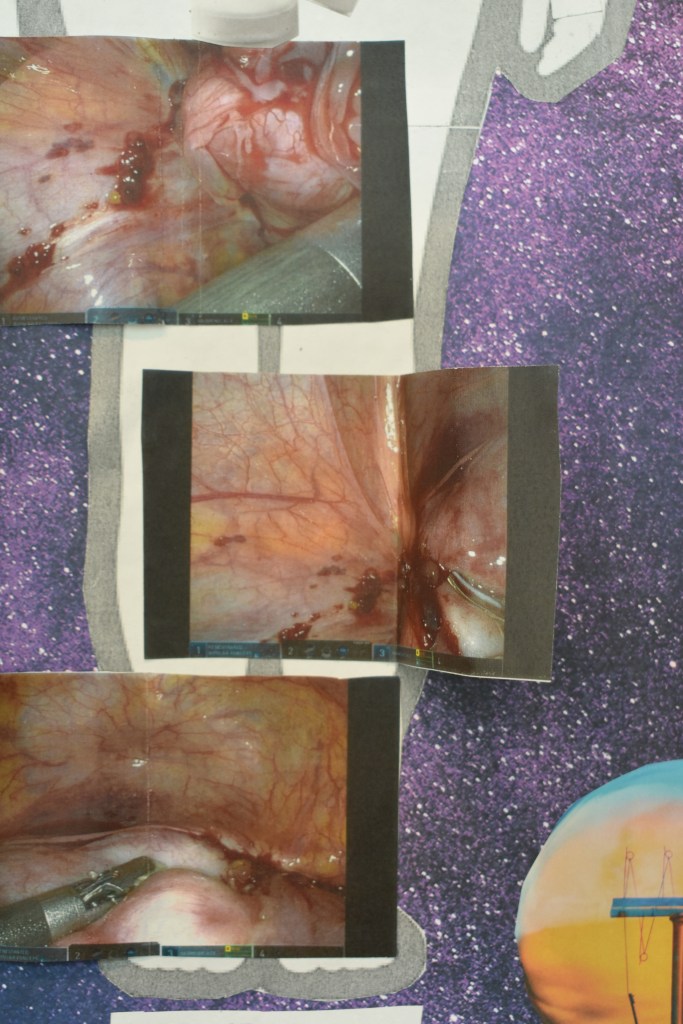
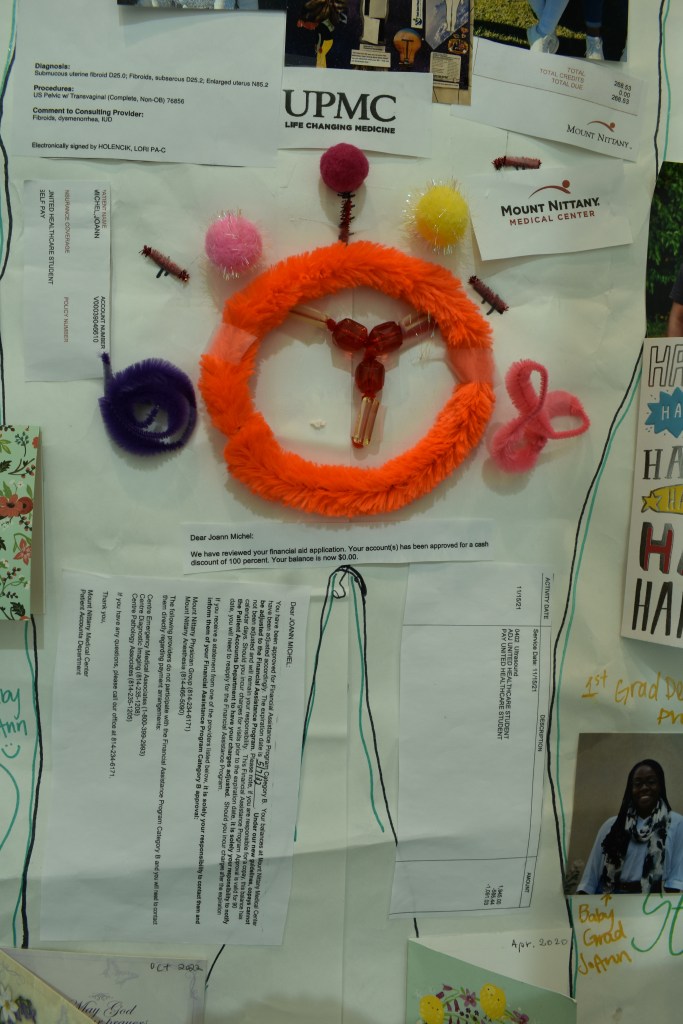
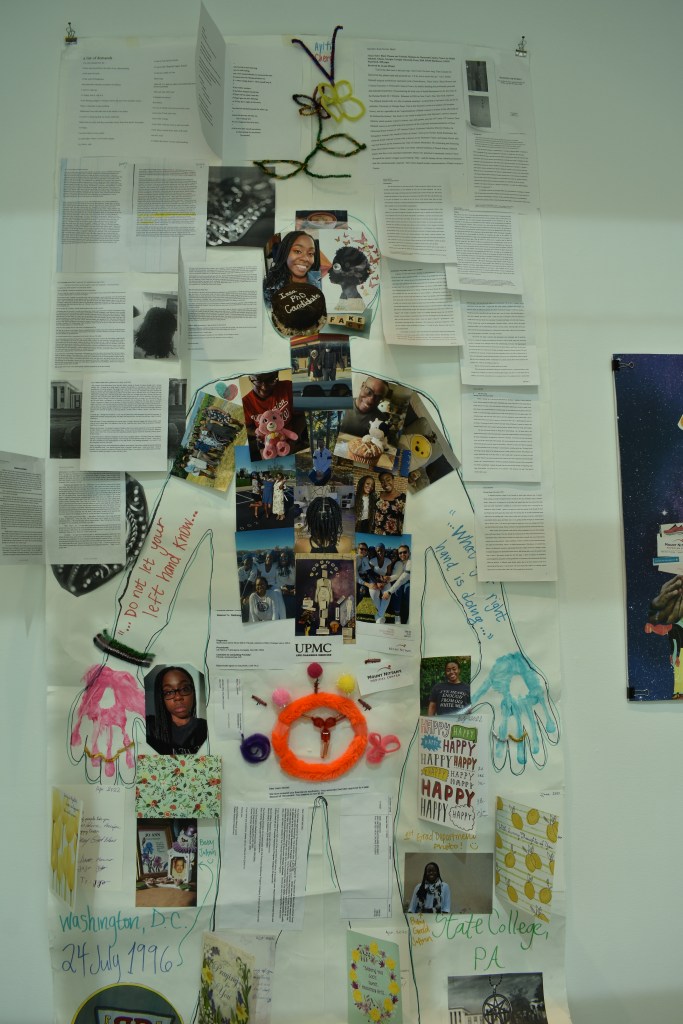
My partner has also been an amazing supportive person, my advisor. Dear God, my advisors are wonderful, wonderful women. And as I speak from this space, I want to specifically mention that I started this project personally. So I did, and I’m still doing, an autoethnographic project, both through writing and through collage, basically going through all my archives, my medical records, my photos, my papers, my personal papers, my journals. All of that come together, and I have created a really big body mapping collage i will be posting to my personal blog very soon that just details everything that i’ve gone through. I also have a smaller one that includes pictures of those same medical records, my first diagnoses, pictures from my first surgery of just how nasty those fibroids were.
All of that is a an embodiment, the embodiment of my survival being removed and now i am entering a space of thrival. I will say that per the MRI that i had a little while ago, my uterus looks like a uterus now. I am very much on the mend. And I just wanted to kind of bring up that somewhat visceral, a little sensitive image, just to show that if you can see what your thrival looks like after you have seen what you’ve gone through on paper, in photos, in writing, through tears, in venting sessions to your friends and advisors and siblings and parents, this is one thing that among many that I’m very excited to talk about. And I’m also eager to acknowledge that to be in this space as a speaker up here is amazing to me, considering it is not something that is, you know, this this space all of the institution that we are in is constantly reminding me was not built for me, and yet I am trailblazing my way through it.
So that is among the few things that I wanted to talk to you about. “
MINI COLLAGE (Project #1)
>> CONTENT WARNING: Contains graphic potentially distressing images!


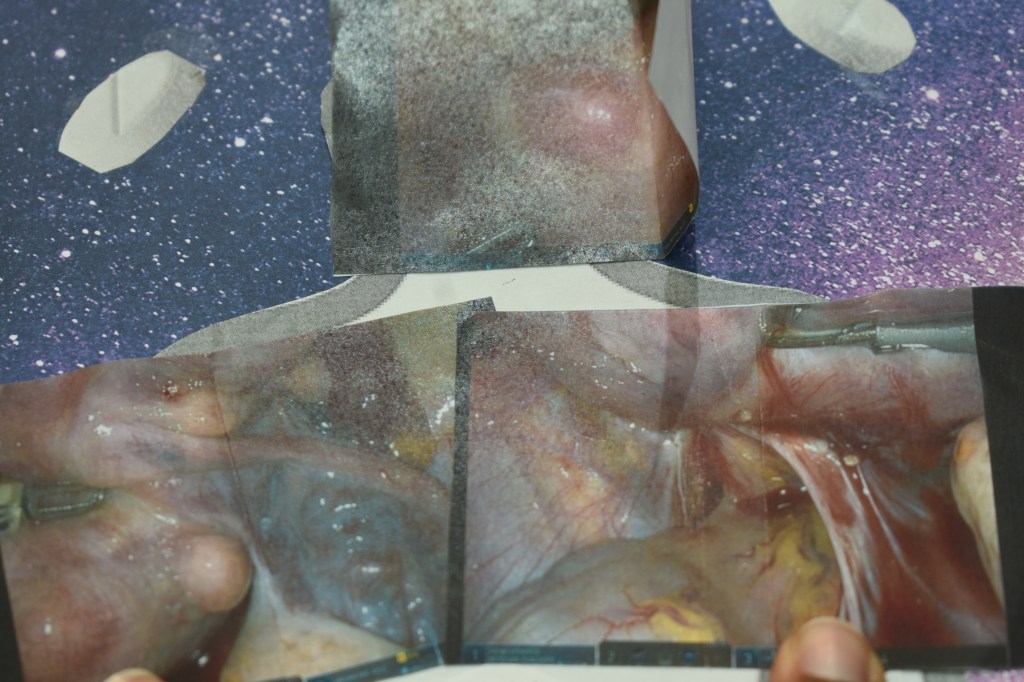
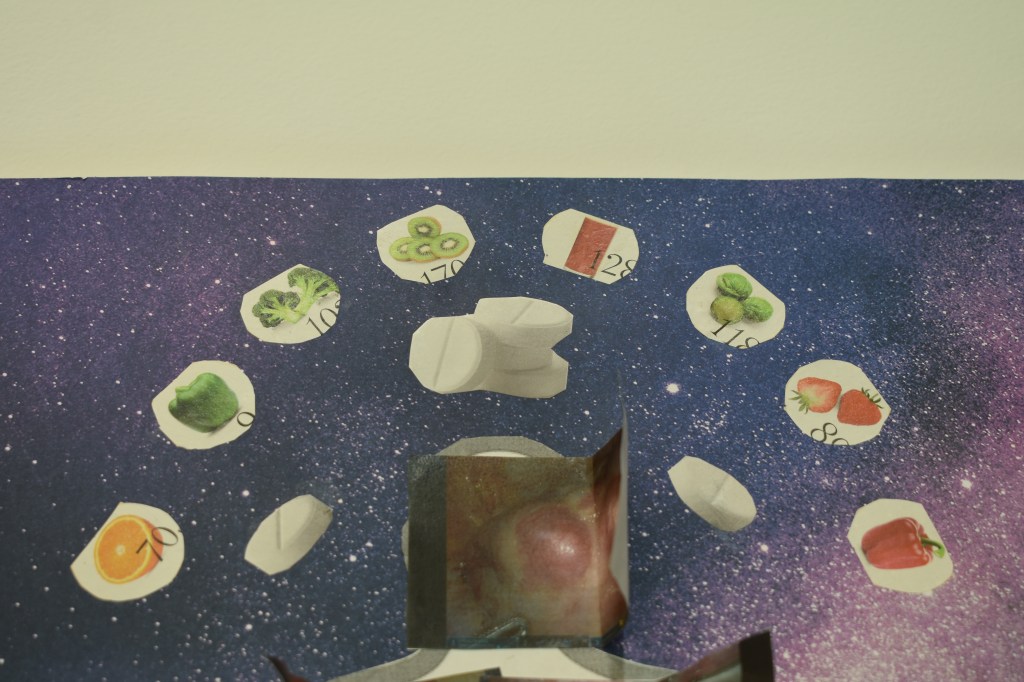
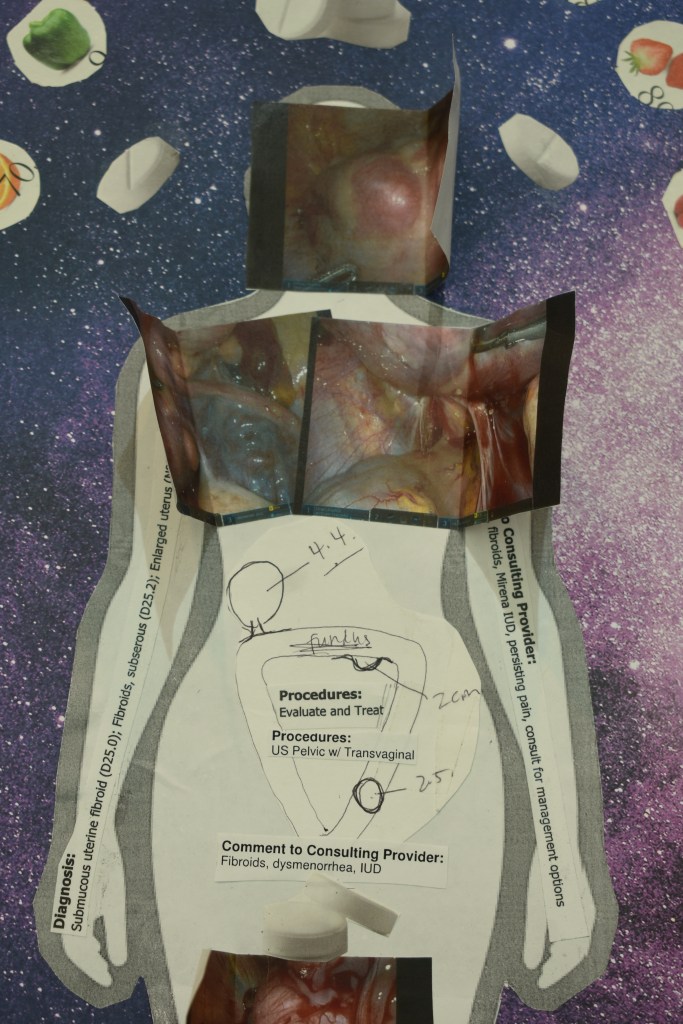
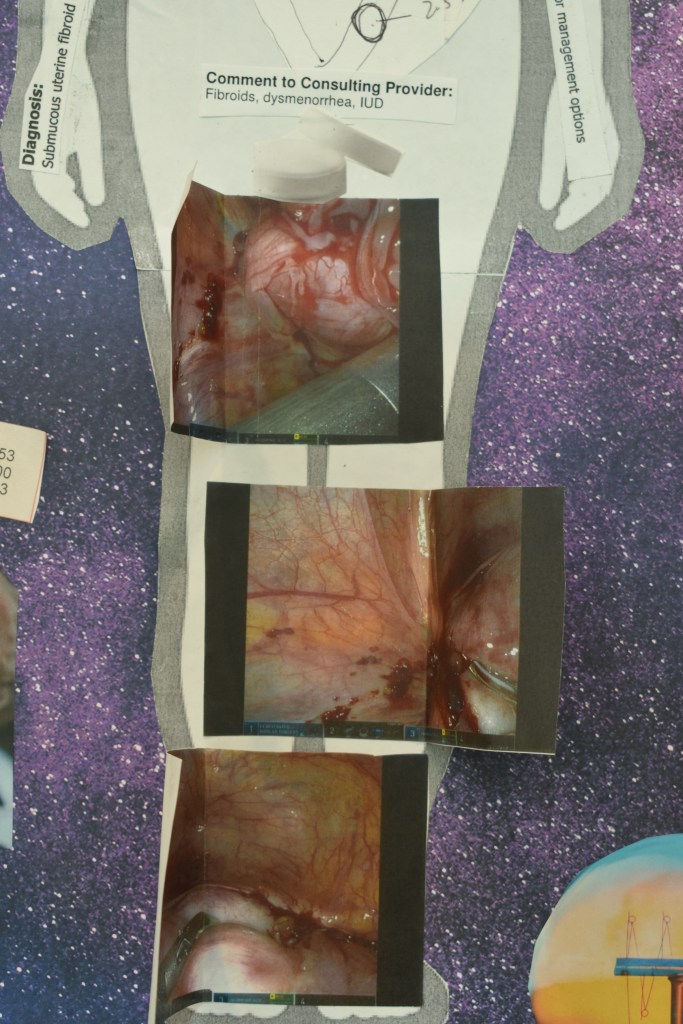
BODYMAP COLLAGE (Project #2)


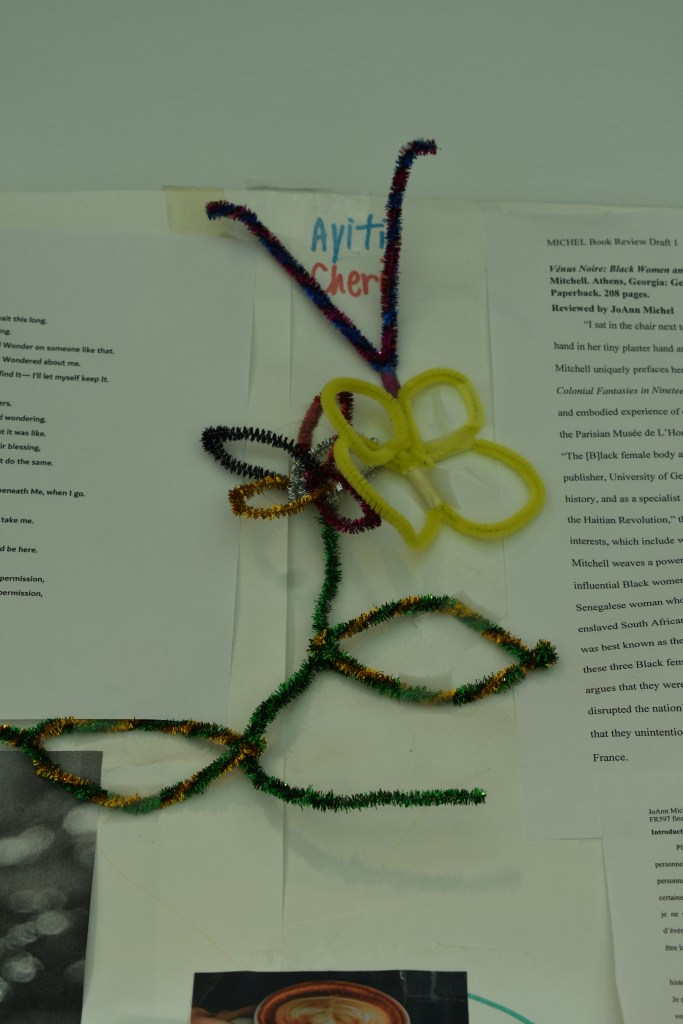

 Bad Blackadémique